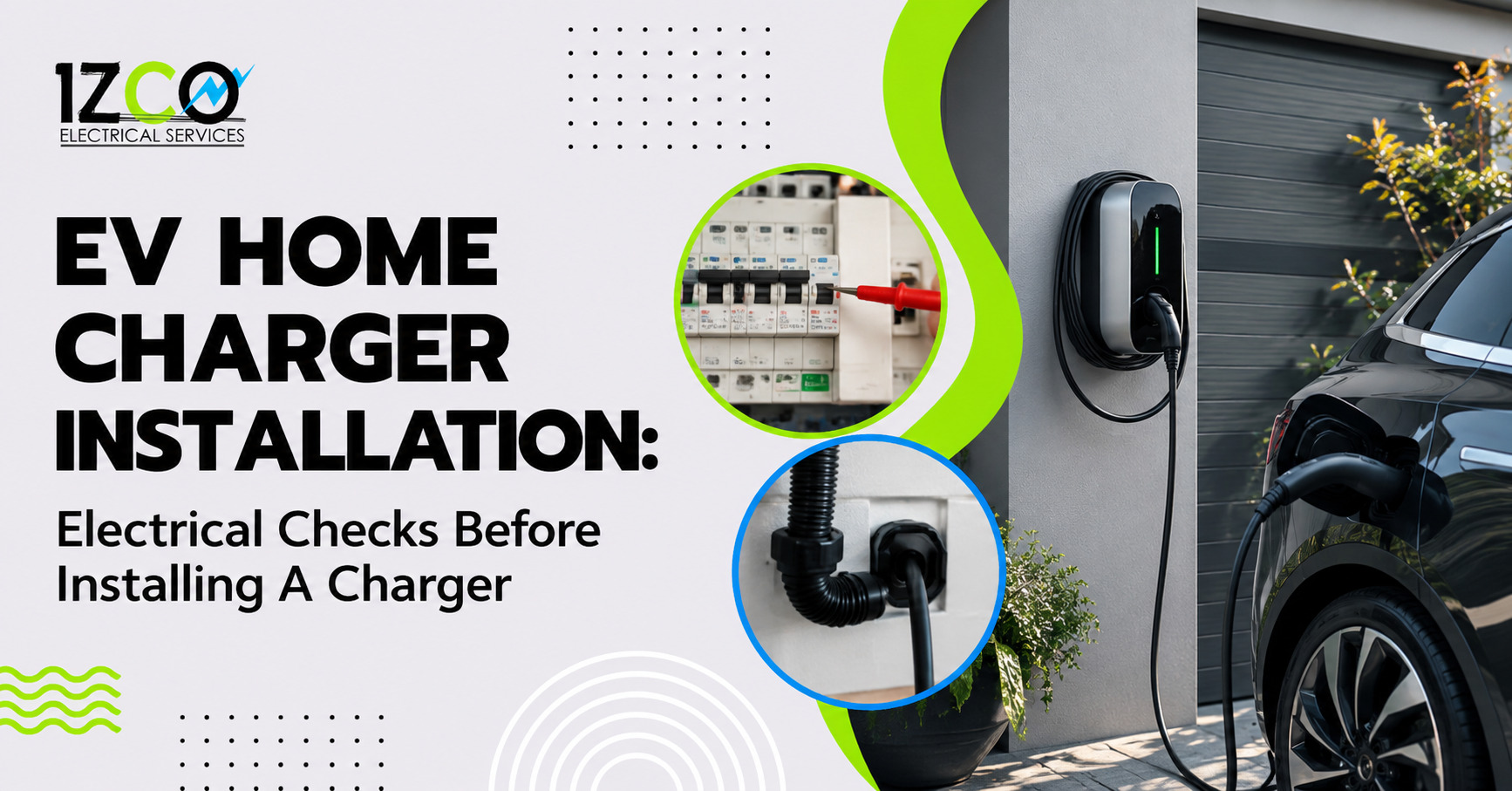
A dedicated home charger lets you plug in after each trip and have the car ready for the next day.
However, an EV charger places a significant, continuous load on a property’s electrical system. Before installation, the switchboard, available supply, wiring and charger location should be assessed. A professional EV home charger installation begins with these checks so the system can operate safely, reliably and at a suitable speed.
For more information about the installation process, charger options and property requirements, learn more about IZCO Electrical’s EV charger installation services in Sydney.
Why The Pre-Installation Assessment Matters
Home chargers may run for hours while air conditioning, cooking, hot water and other appliances are operating. Adding a charger without checking the property’s capacity may cause repeated tripping, overheating, slow charging or unexpected upgrade work.
The assessment confirms whether the electrical system can support daily charging and helps the electrician recommend a practical solution for the property and vehicle.
1. Available Electrical Supply
The electrician will identify whether the property has single-phase or three-phase power and assess the available electrical capacity.
Many Sydney homes can support a standard wall charger using single-phase power. Three-phase power may allow faster charging, but the vehicle, charger and electrical supply must all support the selected charging rate.
A larger charger is not always necessary, particularly when the vehicle remains parked overnight and has enough time to recharge at a lower rate.
Where the available electrical capacity is limited, the electrician may recommend a lower charging rate, dynamic load management, a switchboard upgrade or a single-phase to three-phase power upgrade.
2. Switchboard Condition And Capacity
The switchboard must have sufficient space and capacity for a dedicated EV charger circuit and the required protective devices.
An electrician should inspect the main switch, circuit breakers, safety switches, enclosure and any signs of ageing, overheating or previous alterations. Older switchboards may contain outdated equipment or have insufficient room for another high-demand circuit.
Not every EV home charger installation requires a switchboard upgrade. The decision should be based on the condition of the switchboard, the available capacity and the charger being installed.
Checking the switchboard early also gives the homeowner a clearer understanding of the total installation requirements and likely costs.
When an upgrade is required, IZCO Electrical provides professional switchboard upgrade and installation services for residential and commercial properties.
3. Existing Household Electrical Load
A load assessment considers how much electricity the home may use when several major appliances and systems operate at the same time.
These electrical loads may include:
- Electric ovens and cooktops
- Air conditioning systems
- Electric hot water systems
- Pool pumps and heating equipment
- Solar and battery systems
- Workshop machinery
- Other high-demand appliances
When the property has limited spare capacity, dynamic load management may be recommended.
A compatible load management system monitors household electricity demand and reduces the charger’s output when other appliances are using more power. It can then increase the charging rate when additional capacity becomes available.
This can help prevent overloading the property’s electrical supply while allowing the vehicle to continue charging.
4. Dedicated Circuit And Cable Route
A wall-mounted EV charger generally requires its own dedicated circuit from the switchboard. It should not share a circuit with garage power points, lighting or other appliances.
The electrician will determine the appropriate cable size, circuit protection and isolation arrangements based on factors such as:
- Charger capacity
- Cable length
- Installation method
- Property layout
- Environmental conditions
- Manufacturer requirements
The cable route can also affect the installation cost.
If the switchboard is located far from the parking area, the wiring may need to pass through the roof, under the floor, along an external wall or through underground conduit.
Inspecting the proposed cable route before installation helps identify access difficulties, additional materials and any building work that may be required.
5. Earthing And Electrical Protection
An EV charger installation requires appropriate protection against electrical faults, overloads and electric shock risks.
The electrician should confirm the condition of the property’s earthing system and determine the circuit protection required for the selected charger.
The electrical assessment may also consider:
- Residual current protection
- Circuit breakers
- Surge protection
- Electrical isolation
- Charger specifications
- Manufacturer installation instructions
The selected charger should carry the required Australian regulatory compliance marking and be suitable for installation in Australia.
A licensed electrician should install, test and commission the system. An EV charger should not be treated as a standard appliance connection because it can operate at a significant electrical load for several hours.
6. Safe Charger Location
The charger should be positioned where the charging cable can comfortably reach the vehicle without being stretched or creating a trip hazard.
The location should suit the vehicle’s charging-port position and the way the vehicle is normally parked.
For outdoor installations, the electrician should also consider:
- Weather exposure
- Water and drainage
- Direct sunlight
- Physical protection
- Vehicle impact risks
- Charger weather-resistance rating
The charger should not be positioned where it could be struck by a vehicle, blocked by stored items or exposed to avoidable damage.
Smart chargers may also require reliable Wi-Fi or mobile connectivity. Planning for a future second electric vehicle or installing spare conduit during the first installation may help reduce future upgrade costs.
7. Solar, Batteries And Charging Times
Solar panels and home battery systems can affect charger selection and configuration.
Some smart EV chargers can prioritise surplus solar electricity, while others provide scheduling controls that allow the vehicle to charge during selected periods.
Before installation, consider whether the vehicle will normally be charged:
- During daylight hours
- Overnight
- During off-peak electricity periods
- Using surplus solar energy
- Using stored battery energy
The electrician can determine whether additional monitoring equipment, communications cabling or compatible energy-management equipment is required.
Your electricity retailer can explain the available electricity tariffs or EV energy plans. The electrician can then confirm whether the property’s meter, switchboard and connection are suitable for the proposed charging arrangement.
8. Strata And Rental Approvals
EV charger installations in apartments, townhouses and shared parking areas usually require additional planning.
Property owners may need approval from the owners corporation because the installation could involve common property, shared switchboards, basement parking areas and the building’s overall electrical capacity.
Tenants should obtain permission from the property owner before arranging the installation.
A strata EV charger proposal may also need to address:
- Cable routing through common property
- Electricity usage and billing
- Charger access control
- Building load management
- Parking-space ownership
- Future charger installations
Even when only one resident currently wants an EV charger, the owners corporation should consider how future charging demand may affect the building.
Obtaining the necessary approvals before electrical work begins can help prevent delays, disputes and duplicated infrastructure.
9. Possible Network Or Level 2 Electrical Work
Some EV chargers can be installed using the property’s existing electrical supply. Other properties may require meter work, a supply upgrade, service mains changes, disconnection or reconnection.
If the property’s connection to the electricity network must be modified, approval from the local electricity distributor may be required.
A contractor with Level 2 ASP accreditation can assess the connection and complete eligible network-related work where necessary.
Not every EV home charger installation requires Level 2 electrical work. However, identifying these requirements during the initial assessment can prevent unexpected delays after the charger has been purchased.
IZCO Electrical’s accredited Level 2 electricians in Sydney can assist with supply upgrades, metering, disconnection, reconnection and other authorised network-related work.
What You Should Receive After The Assessment
The electrician should provide a clear recommendation covering:
- Appropriate charger capacity
- Single-phase or three-phase suitability
- Switchboard requirements
- Proposed cable route
- Charger location
- Circuit and electrical protection
- Dynamic load management
- Solar or battery integration
- Any required electrical upgrades
The quote should clearly explain the full scope of work.
After installation, the charger should be tested, commissioned and configured for safe operation. The electrician should also explain basic charger operation, scheduling features and any applicable mobile app settings.
Frequently Asked Questions
Do I Need A Switchboard Upgrade For An EV Charger?
Not always. The requirement depends on the condition of the existing switchboard, available electrical capacity and the charger being installed. An electrician should inspect the switchboard before confirming whether an upgrade is necessary.
Can I Install An EV Charger On Single-Phase Power?
Yes. Many Sydney homes use single-phase power for EV charging. Although three-phase power can support faster charging rates, single-phase charging is often sufficient when the vehicle can charge overnight.
How Long Does An EV Charger Installation Take?
A straightforward installation may be completed within several hours. Installations involving switchboard upgrades, long cable routes, underground cabling, meter work or supply upgrades may take longer.
Is A Dedicated Circuit Required For EV Charging?
A dedicated circuit is generally required for a wall-mounted EV charger. This allows the charger to operate with appropriate circuit protection without placing additional demand on existing power point or lighting circuits.
Can I Use Solar Power To Charge My EV?
Yes. Compatible smart chargers can be configured to use available surplus solar electricity. The suitability of this arrangement depends on the charger, solar system, monitoring equipment and the times when the vehicle is normally connected.
Book An EV Home Charger Installation In Sydney
A dependable home charging setup requires more than selecting a charger. The electrical supply, switchboard, dedicated circuit, protection, cable route and installation location must work together.
IZCO Electrical installs EV chargers for Tesla, BYD, MG, Nissan and other major electric vehicle brands across Sydney.
Our licensed and insured electricians assess single-phase and three-phase properties, install dedicated circuits, complete switchboard upgrades and handle authorised Level 2 electrical work where required.
With more than 16 years of electrical industry experience, clear upfront recommendations and a lifetime workmanship warranty, IZCO Electrical can help you plan a safe, compliant and practical home charging solution.
Contact IZCO Electrical to request a quote for your EV home charger installation or call 0470 123 811 to discuss your property and charging requirements.