
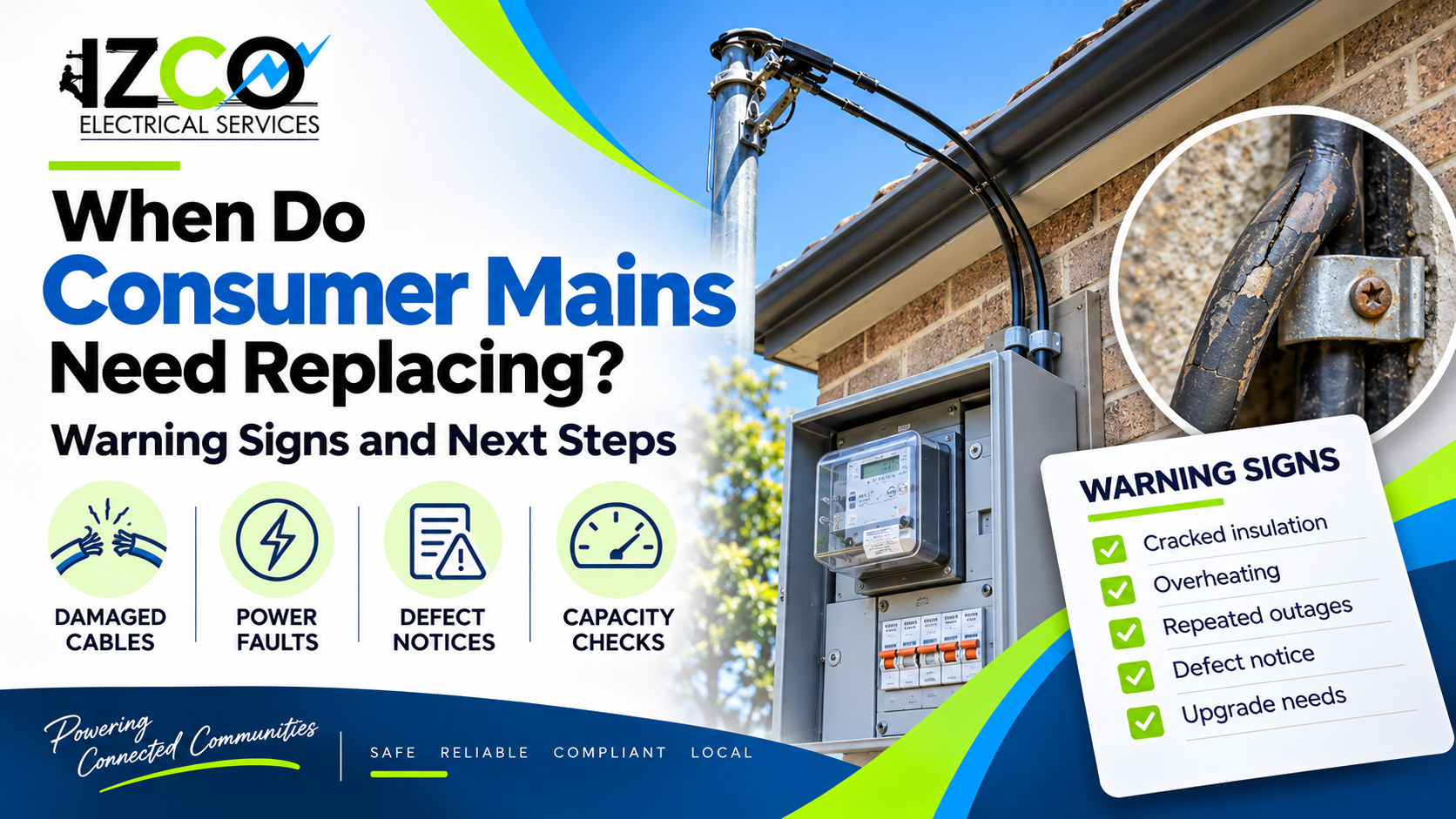
Consumer mains are an important part of your property’s electrical system, but most homeowners rarely think about them until something goes wrong. Damaged cables, ageing insulation or changes to electricity demand can raise questions about whether the existing supply cables are still suitable.
Not every electrical fault means the consumer mains need replacing. However, visible deterioration, a defect notice or an electrical inspection may reveal problems that need attention.
If the issue involves your property’s connection to the electricity network, an accredited Level 2 electrician in Sydney may be required for the authorised connection work.
This guide explains what consumer mains are, the warning signs to recognise, when replacement may be necessary and what Sydney property owners should do next.
What Are Consumer Mains?
Consumer mains are the electrical cables that carry electricity from the point of supply to the main switchboard of a property.
They form part of the connection between the electricity supply and the electrical installation inside your home or business.
Consumer mains may be installed overhead or underground, depending on the property’s connection arrangement.
Although they are designed for long-term use, their condition and capacity must remain suitable for the electrical installation they supply.
It’s also important to distinguish consumer mains from the electricity distributor’s service lines. These are different parts of the electrical connection, and responsibility for their maintenance can differ.
6 Warning Signs Your Consumer Mains May Need Attention
Some problems are visible, while others can only be identified through professional electrical testing.
1. Damaged or Deteriorating Cable Insulation
Electrical cable insulation protects conductors from accidental contact and environmental exposure.
Over time, insulation can deteriorate because of age, heat, moisture, physical damage or unsuitable installation conditions.
Warning signs may include:
- Cracked or visibly damaged insulation
- Exposed or deteriorating cable sections
- Signs of overheating near cable connections
- Damage caused by weather, pests or building work
Never touch or attempt to inspect damaged electrical cables yourself. A licensed electrician should assess the condition and determine whether repair or replacement is necessary.
2. Signs of Overheating Around Electrical Connections
Burning smells, discolouration or unusual heat near electrical supply equipment can indicate a potentially serious problem.
Possible causes include loose connections, damaged conductors or overloaded electrical components.
These symptoms do not automatically mean the consumer mains are faulty. The problem could involve the switchboard or another part of the electrical installation. However, they should be investigated promptly.
If you notice smoke, sparking or a burning smell, keep clear of the affected equipment and arrange urgent electrical assistance.
3. Repeated Electrical Supply Problems
Frequent electrical interruptions can sometimes indicate a problem with the property’s incoming supply.
Examples include:
- Unexplained power interruptions
- Intermittent electrical supply
- Repeated faults associated with supply equipment
- Visible damage around the incoming cable connection
These symptoms can have several causes, including faults within the property or the electricity distribution network. A professional assessment is necessary before determining whether the consumer mains are involved.
4. A Defect Notice Identifying Supply Cable Problems
An electricity distributor may issue a defect notice when an electrical installation or connection does not meet relevant safety requirements.
A notice might identify damaged cables, unsuitable connection equipment or other electrical safety concerns. The required work depends on the actual defect identified.
If you have received a notice from Ausgrid or Endeavour Energy, our guide to electrical defect notices and what they mean explains the next steps and why the specified deadline matters.
Do not assume that every defect notice requires complete consumer mains replacement.
5. Existing Cables May Not Support a Planned Electrical Upgrade
A home’s electricity needs can change over time.
Installing larger electrical equipment, renovating a property or increasing the available electrical supply may require an assessment of the existing cable capacity.
For example, a property owner considering a single-phase to three-phase power upgrade may need the consumer mains checked as part of the planning process.
The electrician must determine whether the existing conductors, switchboard and connection equipment are suitable.
Replacement is necessary only when the assessment or applicable requirements show that the existing installation cannot be retained.
6. Cable Damage During Renovation or Construction
Building and excavation work can affect existing electrical supply cables.
Damage may occur during:
- Excavation near underground electrical cables
- Structural alterations
- Switchboard relocation
- Work around overhead electrical connections
- Demolition or major renovation
If a cable is damaged during construction, stop work in the affected area and arrange a professional assessment.
Never attempt to move, reconnect or repair supply cables without the appropriate qualifications and authorisation.
Does the Age of Consumer Mains Mean They Need Replacing?
Not necessarily.
Older electrical cables may remain suitable if they are in good condition, have adequate capacity and meet applicable safety requirements.
Likewise, relatively new cables can require replacement if they have been damaged or incorrectly installed.
An electrician considers several factors, including:
- Cable condition and insulation integrity
- Conductor size and current-carrying capacity
- Existing electrical load
- Installation environment
- Connection arrangements
- Applicable electrical and network requirements
The decision should be based on the condition and suitability of the installation rather than age alone.
What Happens During a Consumer Mains Inspection?
A licensed electrician begins by reviewing the reported problem and the property’s existing electrical arrangement. The assessment may involve several stages.
Reviewing the Existing Installation
The electrician identifies the relevant supply equipment and considers the condition, accessibility and arrangement of the consumer mains.
Checking for Damage or Deterioration
Visible cable sections, terminations and relevant electrical equipment may be checked for damage, overheating or other safety concerns.
Carrying Out Appropriate Electrical Testing
Where required, the electrician performs testing to assess the installation’s safety and compliance. Testing must be carried out using appropriate electrical safety procedures.
Determining Whether Repair or Replacement Is Needed
The findings help establish whether the existing cables can remain in service or whether corrective work is required.
The electrician can also identify whether the proposed work involves equipment that requires an appropriately authorised Level 2 Accredited Service Provider.
Is a Level 2 Electrician Required to Replace Consumer Mains?
Not for every part of the job.
Consumer mains work must be carried out by an appropriately licensed electrical professional. However, tasks involving the electricity network connection, authorised disconnection or reconnection, or certain service equipment may require a Level 2 ASP with the relevant network authorisation.
The distinction matters because consumer mains and distributor service cables are not the same thing.
For example, replacing customer-side wiring may involve a licensed electrical contractor, while disconnecting and reconnecting the supply at a network connection point may involve authorised Level 2 service work.
The exact requirements depend on the property, distributor and scope of work. In Sydney, this may involve the requirements of Ausgrid or Endeavour Energy.
What Does Consumer Mains Replacement Involve?
If an inspection confirms that replacement is necessary, the electrician will plan the work around the property’s supply arrangement.
Depending on the installation, the process may include:
- Assessing the existing consumer mains and confirming the required cable specification.
- Identifying any distributor approval or authorised service work requirements.
- Arranging safe isolation or disconnection where necessary.
- Removing or replacing unsuitable cables and associated equipment.
- Completing the required electrical testing and compliance documentation.
- Arranging authorised reconnection where applicable.
Some properties may also require changes to cable routes, protection equipment or switchboard connections. Because installations vary, the required work should be confirmed through a site-specific assessment.
Can Consumer Mains Be Replaced Without Upgrading the Switchboard?
In some cases, yes.
If the existing switchboard remains suitable and compliant, consumer mains replacement may not require a complete switchboard upgrade.
However, if the switchboard has insufficient capacity, deteriorated equipment or other compliance issues, additional work may be necessary.
The electrician should assess both components before recommending a solution. Replacing consumer mains alone will not resolve unrelated faults inside the switchboard.
How Much Does Consumer Mains Replacement Cost in NSW?
There is no single price that applies to every property.
The scope and cost depend on factors such as:
- Length and size of the replacement cable
- Overhead or underground installation
- Accessibility of the existing cable route
- Switchboard and connection requirements
- Network coordination and disconnection needs
- Additional equipment or installation work
Underground installations may require excavation or other access arrangements, while overhead connections can involve different equipment and clearance requirements.
A site inspection helps establish the actual work involved before a reliable quotation can be prepared.
How Can Property Owners Prepare for an Inspection?
You can help the electrician understand the issue by gathering relevant information before the visit.
Useful details include:
- Property address and type
- Photographs of accessible electrical equipment, taken from a safe distance
- Any electricity distributor defect notice
- Details of recent electrical faults
- Planned renovations or additional electrical equipment
- Previous inspection reports, if available
Do not remove electrical covers, open sealed equipment or approach damaged cables to obtain photographs.
These details can help the electrician identify the appropriate inspection and any network-related requirements.
Frequently Asked Questions
What is the difference between consumer mains and service lines?
Consumer mains generally connect the point of supply to the property’s main switchboard. Service lines form part of the connection from the electricity distribution network. Their ownership, maintenance obligations and work requirements can differ.
How long do consumer mains last?
There is no single replacement age that applies to every installation. Cable condition, installation quality, environmental exposure and electrical demand all influence whether the existing cables remain suitable.
Can damaged consumer mains cause power outages?
Yes, faults affecting consumer mains can interrupt electricity supply. However, outages can also result from switchboard faults, other electrical equipment or the distribution network. Professional diagnosis is necessary.
Do consumer mains need replacing when upgrading to three-phase power?
Not always. The existing cables must be assessed to determine whether their size, condition and configuration are suitable for the proposed supply. Replacement may be required if they cannot meet the applicable requirements.
Can an ordinary electrician replace consumer mains?
An appropriately licensed electrical contractor can perform relevant customer-side electrical installation work. However, work involving authorised network connections or disconnection and reconnection may require a Level 2 ASP with the necessary authorisation.
Will replacing consumer mains require the power to be disconnected?
Replacement generally requires safe isolation of the relevant electrical supply. The necessary disconnection arrangements depend on the installation and the work being undertaken.
What should I do if I receive a defect notice for consumer mains?
Read the notice carefully and arrange an assessment by a suitably qualified electrician. The notice should identify the issue and any required rectification timeframe. Avoid delaying work involving potentially unsafe electrical equipment.
Need Help Assessing Your Electrical Supply?
Damaged or unsuitable consumer mains should be investigated before they create further electrical safety problems.
Whether you have noticed deterioration, received a defect notice or are planning changes to your property’s electricity supply, IZCO Electrical can assess the information you provide and advise on the appropriate next steps.
If your project involves Level 2 service work, request a quote through our Contact Us page or call 0470 123 811 to discuss your property’s electrical supply requirements.