
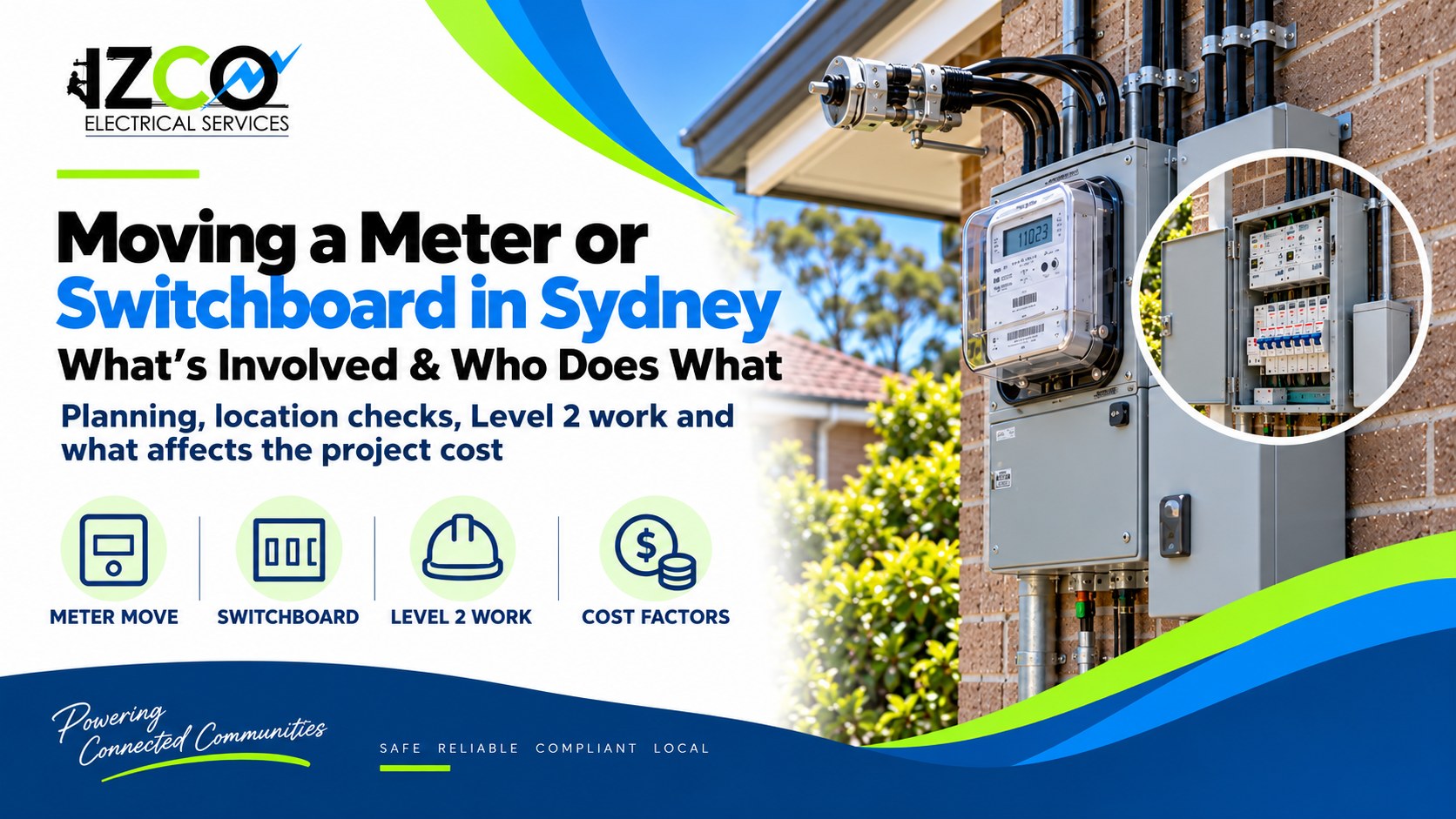
A renovation can involve two requests that sound the same: moving the electricity meter and moving the switchboard. They do different jobs and involve different people, and treating them as one leads to incomplete quotes and builders waiting on the electrician.
If the plan changes where the supply comes in, speak to a Level 2 electrician in Sydney before the new location is built. Not every internal switchboard move needs Level 2 accreditation, and this article explains where the line falls.
Meter vs Switchboard
The meter records consumption and is tied to your retailer and the appointed metering parties. Moving it can change how the premises connects to the supply, and who is authorised depends on which part of the metering and connection changes.
The switchboard distributes power to the circuits and holds the circuit breakers and safety switches. Moving one is generally licensed electrical work, unless service-side equipment is affected.
Meter installation, replacement and relocation are different jobs. A retailer and metering coordinator may arrange meter tasks, a licensed electrician does the related installation work, and a Level 2 provider is needed for specified service-connection tasks, not for every meter visit. Identify which of these you need:
- A first meter or changed metering for an approved new connection
- Replacing a faulty or outdated meter without moving it
- Moving the meter enclosure, switchboard, point of attachment or incoming supply equipment
- A capacity change that also affects protection, network approvals or the service cable
When a Move Needs Level 2 Work
- Move the switchboard only, supply untouched: Who is involved – Licensed electrician
- Move the switchboard and the incoming supply: Who is involved – Licensed electrician and Level 2 provider
- Relocate the meter enclosure or point of attachment: Who is involved – Level 2 provider, plus the metering provider for the meter itself
- Permanent disconnection or reconnection: Who is involved – Level 2 provider
Ask the contractor to name the network operator, the service connection boundary, who is responsible for metering and any outage needed. IZCO describes meter installation, switchboard upgrades and installations and disconnection and reconnection separately because they have different requirements.
Why People Move Them
- An extension or garage conversion blocks the current position
- The equipment is hard to reach safely
- A new supply design changes the connection point
- A defect notice affects the equipment or its connections
Moving equipment for convenience still involves wiring, isolation and compliance work, so a contractor should check the reason and whether a simpler compliant option exists. A relocation may also need new circuits, consumer mains, an enclosure or altered earthing.
Check the Location First
A new position must meet the access, clearance, weather-protection and network requirements for the equipment. A cupboard, bedroom wall or fence line might not qualify, and a spot that suits your design can still fail the distributor’s rules. Ask the electrician to mark the proposed position on the plans, and check that a new fence, retaining wall, driveway or cladding won’t block service access or create an unsafe cable route. In strata buildings, common-property restrictions may also apply.
Network and metering staff may need to reach the equipment, so consider how you’ll reach the safety controls and whether it is protected from weather, damage and building works. The standards behind this are in switchboard upgrade regulations.
How a Relocation Is Planned
- Define why the equipment is moving and where it should go.
- Inspect the existing meter, switchboard, supply and cable routes.
- Confirm who is responsible for each part and what authorisation is needed.
- Agree scope, outages and timing with the builder and other trades.
- Complete the authorised disconnection and installation work.
- Test, document and arrange approved reconnection.
Appoint one project contact to coordinate the licensed contractor, any Level 2 provider, the distributor and metering provider, and in strata or commercial buildings, building management. A written sequence that separates civil work, enclosure placement, meter changes, wiring and final reconnection stops builders closing walls or finishing the exterior before the route is accepted.
What Affects the Cost?
- Distance between the old and new positions
- Condition and capacity of existing cables and wiring
- New enclosures, protection or metering changes
- Excavation, wall penetrations and making good
- Access limits, outages and coordination with other parties
A quote should say whether the meter work, switchboard work and network-side tasks are all included. The lowest price can leave out making good or provider attendance, so a site-specific scope beats a generic relocation price.
Questions to Ask Before You Approve
- Which equipment is moving: the meter, the switchboard or both?
- Who is responsible for the meter change and the network-side work?
- Do the standards and the distributor permit the new location?
- What happens to the old cables and protective equipment?
- How long will the power be off, and who confirms restoration?
- What will be documented and reinstated at the end?
Frequently Asked Questions
Can a normal electrician relocate a meter?
Not on their own. Metering work involves the appointed metering provider and particular authorisations, so confirm who is responsible first.
Can a switchboard be moved without moving the meter?
Sometimes. It depends on the supply and wiring arrangement and whether the approved installation can take the new position.
Do I need to tell my retailer?
Some metering and connection changes involve the retailer, metering coordinator or distributor. The project team should say which requests are needed.
Will the power go off?
Yes, a planned isolation is usually needed. Your provider will explain timing and who restores supply.
Can a meter go on a boundary fence?
Only if the location and enclosure meet the access, protection and connection requirements. It’s not an option at every property.
Should I replace an old switchboard while moving it?
It may make sense if its condition, protection or capacity justify it. The electrician should explain which changes are required and which are optional.
Send Your Plans Before Construction Starts
Metering and switchboard positions are far easier to fix on paper than on site. IZCO Electrical is a Grade A ASP and licensed contractor, so one team manages both the supply work and the switchboard work. Send your plans and access details through the call-back form or phone 0470 123 811.