Electrical safety starts with knowing which everyday habits reduce avoidable risk and which problems need a licensed professional. A damaged lead, an overloaded power board or a warm outlet can become hazardous even when the home seems to work normally. Storms, ageing private poles and faults outside the house can also affect power. If the problem is on the incoming supply connection, a Level 2 electrician in Sydney is the right contact.
This guide focuses on prevention and routine awareness. If you are facing sparks, an electrical fire, exposed conductors or another immediate danger, follow what to do during an electrical emergency and call 000.
Why It Matters
Electricity runs lighting, refrigeration, cooking and cooling. Hazards arise when equipment deteriorates, water reaches electrical parts or a circuit is used beyond its safe limits. The condition of protective equipment matters too. Homeowners can spot some warning signs, but they shouldn’t open switchboards or test circuits, and in NSW fixed wiring work must be done by appropriately licensed people.
Safety Switches, Circuit Breakers and Fuses
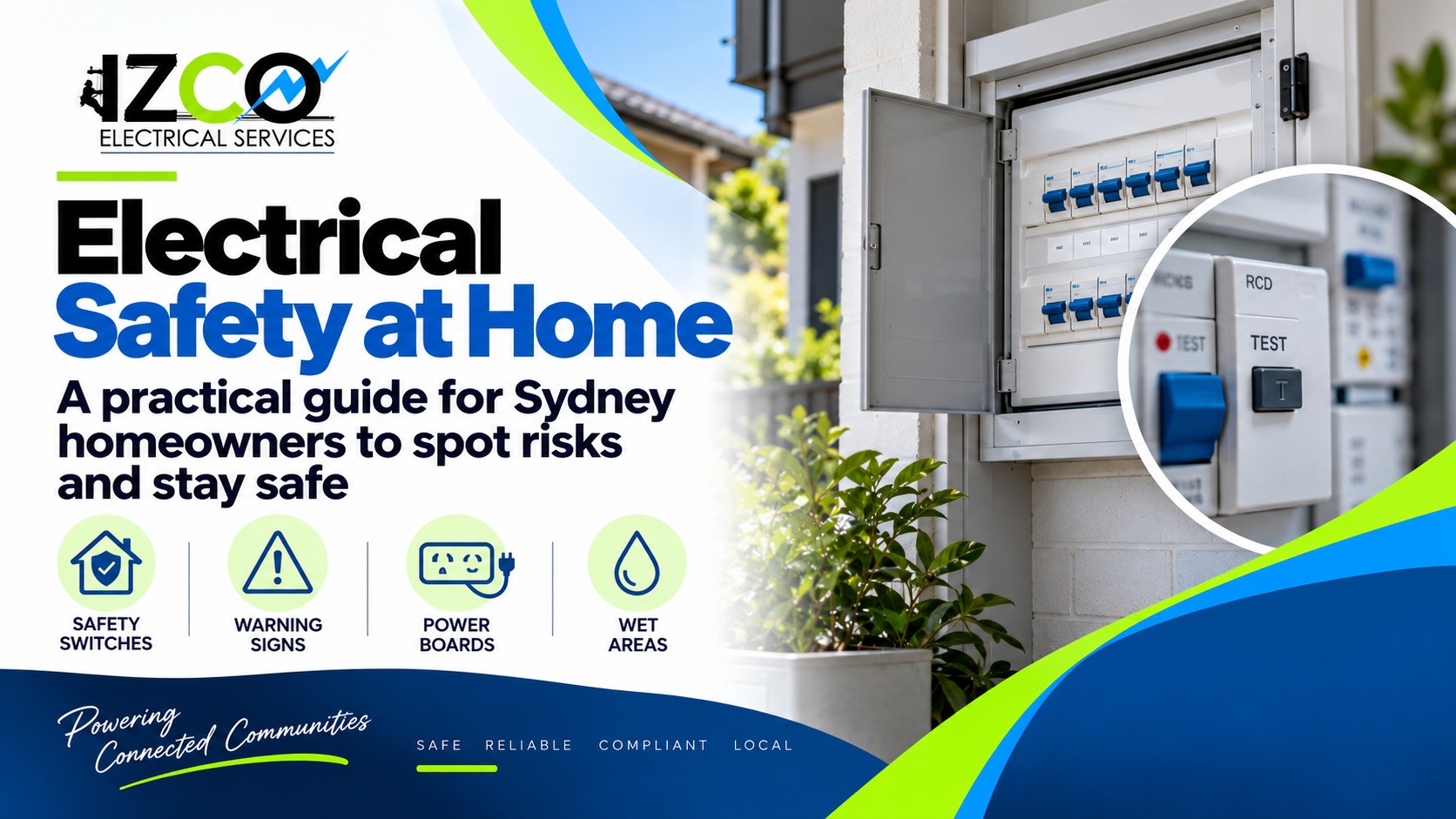
A circuit breaker gives overcurrent protection, while a residual current device (RCD), often called a safety switch, responds to certain leakage-current hazards. The right protection depends on the installation and the rules. An RCD isn’t a guarantee against every electrical injury, and a modern-looking board doesn’t prove every cable is in good condition. If a device trips repeatedly, a licensed electrician should find out why, and the warning signs of a failing switchboard show when an inspection is due.
Warning Signs Inside the Home
- A persistent burning smell or unusual heat at a socket or device
- Cracked, broken or discoloured outlets, or exposed conductors
- Repeated tripping, blown fuses or unexplained interruptions
- Cable damage from pets, furniture or sharp edges
- Dampness or water entering fixed electrical equipment
- Buzzing or sparking from a fitting or enclosure
Not every symptom means rewiring. A single appliance can cause tripping, while a fault in supply equipment may affect the whole home. Diagnosis should rest on inspection and testing. For the next step, see house rewiring in Sydney.
Power Boards and Extension Leads
Power boards suit low-demand equipment, but loads must stay within the product and circuit ratings. Don’t daisy-chain boards, run leads under carpet or use an improvised lead as permanent wiring. Heat, damaged insulation and unsuitable plugs are reasons to stop using the equipment. If a room permanently depends on long leads, ask a licensed electrician about more fixed outlets.
Kitchens, Laundries and Bathrooms
Water raises the danger from damaged equipment. Don’t handle plugs, appliances or sockets with wet hands or while standing in water, keep portable devices away from sinks and don’t route cables over wet surfaces. Fixed equipment near baths and showers has specific installation requirements, so the answer is professional design and suitable equipment, not assuming an ordinary outlet is safe because it’s nearby.
Air Conditioners and High-Demand Appliances
Air conditioning, heaters, dryers and cooking appliances load circuits heavily. What matters is whether the existing circuit and supply can safely carry the actual equipment. A new appliance doesn’t automatically need three-phase supply, but its electrical specifications should be checked before it’s installed. If tripping happens when large appliances run, get it diagnosed, and never bypass protection or swap in an unsuitable higher-rated device.
Older Sydney Homes
Older homes may have wiring from several building and renovation periods, with some circuits fine and others damaged, under-protected or altered unsafely. Age alone doesn’t mean every wire must go. A licensed inspection separates targeted repairs, switchboard changes and wider rewiring.
Outdoor Power Points and Garden Equipment
Outdoor outlets, pumps, lighting and equipment need to suit the conditions, especially where rain, irrigation or pool splashing is possible. A covered verandah isn’t always dry in wind-driven rain. Don’t leave unsuitable power boards outside, and keep leads away from sharp tools and traffic. Ask a qualified electrician about fixed outdoor outlets instead of relying on improvised arrangements. If you’re swapping outdoor lighting, LED retrofitting explains what suits the installation.
Storms, Trees and Overhead Services
Wind and fallen branches can damage service lines, poles and fittings. Some poles and attachments are privately owned and may be the owner’s maintenance responsibility, while the network looks after its own assets. Never trim branches around energised lines or approach a damaged cable. Overhead electrical service lines explains the components and ownership. If you see a fallen line, stay well away, stop others approaching and report it to your network: Ausgrid on 13 13 88, Endeavour Energy on 131 003 or Essential Energy on 13 20 80. Call 000 if there’s immediate danger.
Holiday and Summer Safety
Before using festive lights, extension cords and power boards, check them for damage. Choose gear rated for indoor or outdoor conditions, keep connectors away from water and avoid running high-demand appliances on overloaded boards. Take damaged portable equipment out of use and have recurring circuit trips assessed by a licensed electrician. In holiday rentals and strata properties, make sure everyone knows who to contact about faults.
When to Arrange an Inspection
An inspection is sensible when warning signs recur, an older installation has undocumented alterations, you’re renovating or a defect has been found. The scope should match the concern, because the board, circuits, appliances, incoming service and private poles need different expertise. Ask what was tested, whether the problem is confirmed and which recommended changes are necessary rather than optional.
Everyday Checklist
- Keep power boards within rated use and check portable leads for damage
- Keep plugs, outlets and appliances away from water
- Never attempt DIY changes to fixed wiring
- Get repeated trips, burning smells or damaged outlets diagnosed
- Use products suited to outdoor and wet areas
- Keep children and pets away from damaged electrical items
- Have a plan for storms and power-line incidents
- Check electrical safety responsibilities when renting out or managing a property
General Electrician or Level 2 Provider?
Most home wiring, outlets, appliance circuits and internal board issues can be assessed by a licensed electrician. A Level 2 ASP may be needed for particular incoming service connections, private pole service equipment or authorised disconnection and reconnection. A damaged overhead conductor may need network crews rather than a general electrician, so ask the contractor to identify the equipment and the authorisation, not just how serious the symptom is.
Frequently Asked Questions
Should every older house have its switchboard replaced?
Not automatically. An electrician must assess its condition, protection and the work planned before recommending replacement.
Can I replace a damaged wall power point myself?
No. Fixed wiring work in NSW needs appropriate licensing. Stop using the damaged outlet and arrange licensed work.
Do safety switches prevent all electrical injuries?
No. They protect against certain faults, but can’t replace safe equipment, proper installation or avoiding live conductors.
Is it safe to use an extension lead permanently?
Temporary, suitable use is different from fixed wiring. If a space needs ongoing power, ask about more fixed outlets.
Does a home with solar need different safety practices?
Solar and battery systems have specialised equipment and isolation requirements. Follow the manufacturer’s and installer’s instructions and use qualified professionals for faults.
Do I need a Level 2 electrician for a lighting fault?
Not normally. An authorised Level 2 provider is relevant only when network connection work is involved.
Should I remove the switchboard cover to check it?
No. Opening the enclosure can expose live parts. Describe the symptoms and arrange a licensed assessment.
Worried About a Defect at Home?
Prompt attention to defects reduces avoidable risk. IZCO Electrical provides general electrical and Level 2 services across Sydney. Describe your concern through our defect notice repair service or phone 0470 123 811.