Yes. Most Electric Vehicle owners do most of their charging at home, usually overnight while the car is parked. How well it works depends on the charger you choose, the capacity of your switchboard and supply, and whether your home needs any upgrades first. This guide explains the options, what to check and how home charging compares with public charging.
Three Ways to Charge an EV at Home
- A standard power point: a portable charger plugs into a normal outlet. It is the slowest option and puts a sustained load on one circuit, so have an electrician confirm the circuit and outlet suit it.
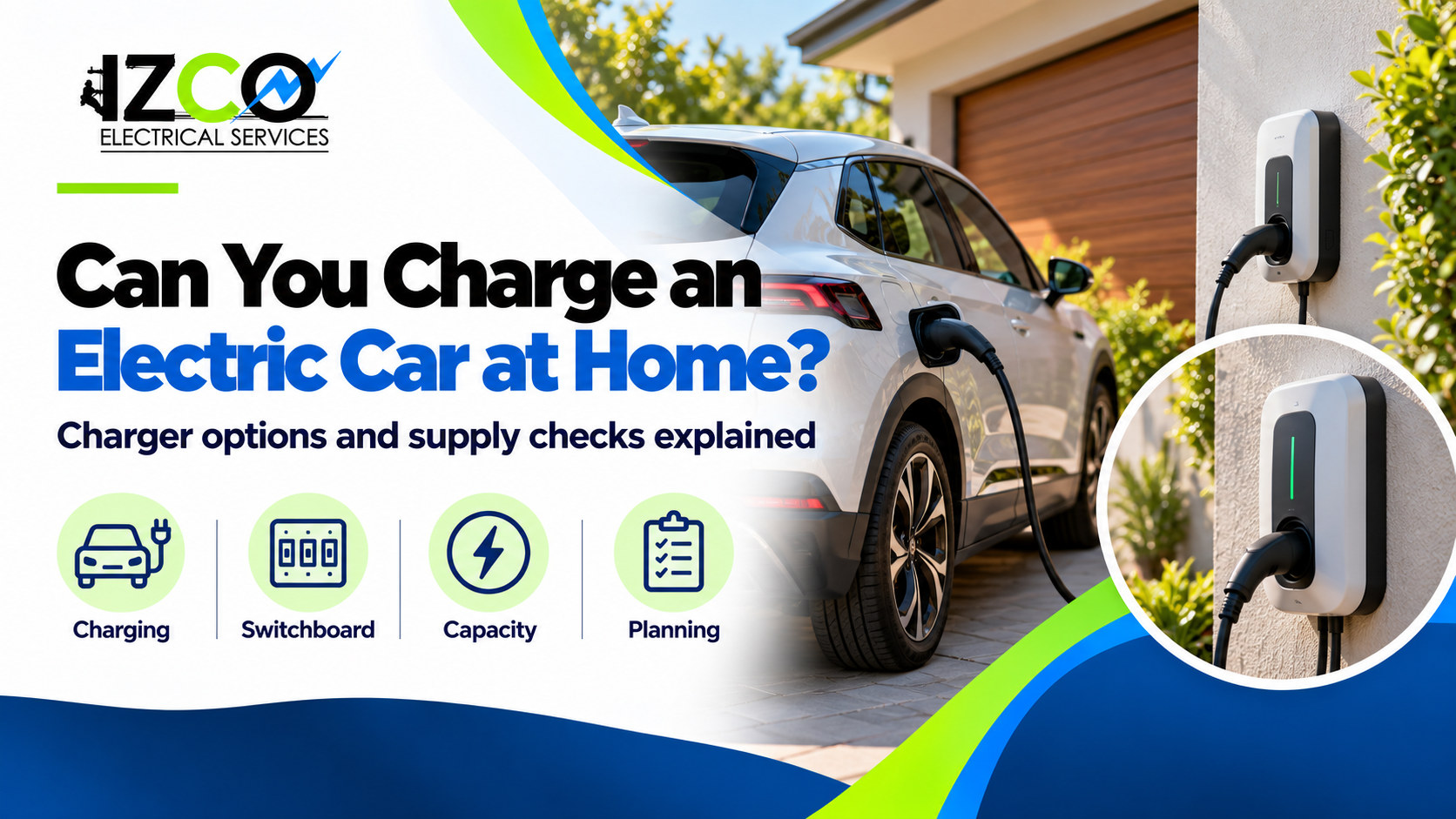
- A wall-mounted charger on a dedicated circuit: the most common home choice. A single-phase circuit rated at 32 amps supports roughly 7 kW.
- A wall-mounted charger on three-phase supply: where the property, the car and the supply allow it, a three-phase connection can support higher charging power, up to about 22 kW.
The car also limits how fast it charges, so a more powerful charger does not always charge a given car faster.
How Long Does Home Charging Take?
Charging time is the energy you need divided by the charging power. As an example, adding 30 kWh to a battery at 7 kW takes a little over four hours. A slower charger takes proportionally longer. Check your car’s maximum charging rate before you choose a charger.
What Does a Safe Home Setup Need?
- A licensed electrician: Ausgrid states that all electrical work inside a customer’s property must be carried out by a licensed electrical contractor.
- A dedicated circuit: the wiring rules treat EV charging as a continuous, high load, so it should not share a circuit with other equipment.
- Suitable protection: the circuit needs the right residual current protection for the charger. Your electrician selects it.
- Enough capacity: the switchboard and supply must carry the charger on top of your normal load. See the signs you need a switchboard upgrade and the guide to single-phase vs three-phase power.
A home charger is not an ordinary power point job. If you are adding one, the complete EV charger installation guide covers the whole process.
Do You Need Approval to Install a Home Charger?
In Ausgrid’s area, Ausgrid says its approval is required where your licensed electrician identifies that the supply needs to be upgraded, and it recommends the electrician completes the connection application for you. Depending on the installation, you may also need to notify Ausgrid before installing. Other networks have their own requirements, so your electrician should check the rules for your address.
Ausgrid also says that if your home is over 20 years old and has not been rewired, the existing meter may need upgrading so usage is recorded accurately. Your retailer, not Ausgrid, is responsible for changes to your metering or tariff.
Charging at Home vs Public Charging
Most EV owners use both, but each suits a different job.
- Convenience: home charging happens while the car is parked, with no stops. Public charging means travelling to a charger and sometimes waiting for a free bay.
- Speed: public DC fast chargers are generally quicker than a typical home charger. A home charger usually charges overnight, which covers most daily driving.
- Cost: home charging uses your electricity plan, so a time-of-use tariff or solar can lower the cost per charge. Public charging prices vary by network and location, so check the price before you plug in.
- Battery care: vehicle makers have their own advice on regular fast charging and charge limits. Check your owner’s manual.
- Reliability: a home charger is available whenever you are home. Public chargers can be busy or out of service.
A practical approach is to charge at home for everyday use and use public chargers for long trips.
Using Solar and Off-Peak Tariffs
If your home has solar, you can charge during the day with your own generation, if the car is at home. A time-of-use tariff with cheaper off-peak periods can make overnight charging cheaper. Ask your retailer what plans are available.
Protecting Your Switchboard When You Add a Charger
Charging can add a large load to a home that is already near its limit. Options include a switchboard upgrade or dynamic load management, which lowers the charger’s output when the rest of the house is using a lot of power.
Frequently Asked Questions
Can I charge my electric car from a normal power point?
Often yes, using the portable charger, but it is slow and puts a long continuous load on one circuit. Have an electrician confirm the circuit and outlet are suitable, and consider a dedicated wall charger for regular use.
Do I need a dedicated EV charger at home?
Not strictly, but a dedicated charger on its own circuit is safer and faster for daily use than relying on a standard outlet.
Will my home need a switchboard upgrade?
Not automatically. It depends on spare capacity and the charger’s power. An assessment confirms what is needed.
Do I need to tell my electricity network?
Sometimes. Your electrician can tell you whether a connection application or notification is needed for your address.
How long will my car take to charge at home?
Divide the energy you need by the charger’s power. Seven kilowatts adds roughly 7 kWh per hour, subject to the car’s own limit.
Ready to Charge at Home?
Tell IZCO which car you drive, where you would like the charger and your suburb, and the team will explain what your home needs through our EV car charger installation service. Request a call back or phone 0470 123 811.