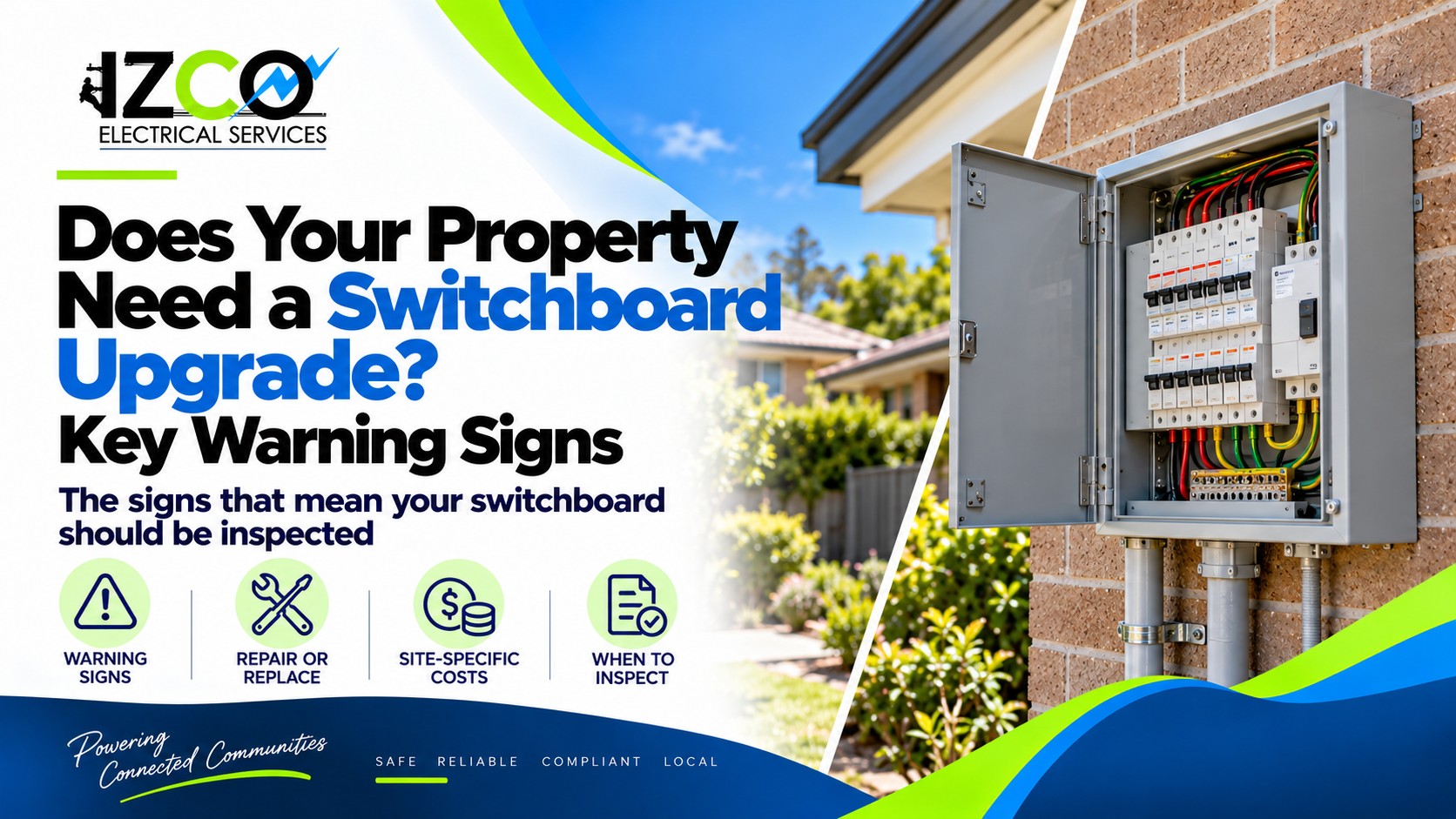
Your switchboard distributes power to the circuits in your home or business and holds the protective equipment. It’s usually out of sight, so an old fuse box or damaged part may only get noticed when a circuit keeps tripping, new appliances are planned or an electrician finds a defect.
Not every older switchboard needs immediate replacement. This article helps you recognise when to arrange an assessment. The standards and paperwork are in switchboard upgrade regulations in NSW, and if the problem involves incoming supply equipment, metering or the service connection, a general board upgrade won’t be enough and you’ll need a Level 2 electrician.
Seven Signs Your Switchboard Needs an Inspection
1. Repeated tripping or blown fuses
A protective device that keeps operating can point to a fault, overload or problem elsewhere in the installation. Don’t keep resetting it without finding the cause. A tripping device may come from a faulty appliance or damaged circuit, and replacing the board is only one possible outcome.
2. Burning smells, heat or scorch marks
Heat damage, smoke or a burning smell near the switchboard needs urgent professional attention. Don’t remove covers, touch hot surfaces or investigate energised equipment, and call 000 if there is immediate danger.
3. Old rewirable fuses or worn parts
Older rewirable fuses may lack protection expected in modern installations. They merit review, particularly during renovations or when circuits are being added, and a licensed electrician should say which upgrades are required.
4. Not enough suitable safety switch protection
Residual current devices (RCDs) protect against certain electric shock hazards, and a circuit breaker doesn’t do the same job. An electrician can assess your current protection against the work you plan.
5. New high-demand appliances
A large air conditioner, EV charger or electric cooking can call for a circuit and supply capacity check. New loads don’t automatically mean a whole new board, but existing capacity should be confirmed. When the question is the incoming supply rather than the board, single-phase vs three-phase power explains the difference.
6. Renovations, additions or major rewiring
A kitchen renovation, extra circuits or an extension can reveal that the board lacks space or the right protection. Have the proposed changes assessed alongside the existing board before the scope is set. Where the renovation also touches the supply, renovation electrical planning separates internal circuit changes from service-side work.
7. A defect notice or failed inspection
A distributor defect notice or an electrician’s inspection can identify equipment that needs fixing. Follow the instructions and deadline, because the work might affect the service connection as well as the board.
Is It Overloading? What It Means and What to Do
Overloading happens when a circuit is asked to carry more current than it is designed for. The circuit breaker or fuse should trip to protect the wiring. If it keeps tripping, something is drawing too much current or the circuit has a fault.
Common signs include:
- Lights that dim or flicker when a large appliance starts
- Warm or discoloured power points, plugs or power boards
- A breaker that trips whenever several appliances run together
- Double adaptors or extension leads running heavy appliances
What you can safely do:
- Unplug some appliances and spread heavy loads across different circuits
- Avoid running heaters, air conditioners or cooking appliances from power boards or extension leads
- Turn off the affected circuit if a power point feels hot, and keep clear of it
What you should not do:
- Do not fit a higher-rated breaker or fuse to stop the tripping. That removes the protection the wiring depends on.
- Do not open the switchboard or touch components yourself.
A burning smell, smoke or visible scorching is an emergency, so follow the steps in what to do during electrical emergencies. If tripping keeps happening, book an inspection. The cause may be a faulty circuit or appliance, a lack of circuits for your loads, or an ageing board, and only testing will show which.
Urgent or Investigate?
Burning smells, smoke, visible arcing or damage that presents immediate danger call for urgent action: keep clear and use emergency services where needed. Repeated tripping, ageing fuses or too little board space also deserve assessment, but they don’t prove an immediate full replacement is the only safe outcome. The electrician should find the cause first.
What’s Checked in an Assessment?
- The board’s age, condition and configuration
- Circuit protection, RCDs, breakers and labelling
- Cable condition, earthing and test results
- Connected load and planned new appliances
- Whether service-side equipment or network coordination is involved
The result can be targeted repairs, new protection, a broader replacement or extra wiring, and a written explanation should separate faults found from elective improvements.
Repair or Full Replacement?
If the enclosure, wiring and layout are still suitable, replacing a damaged protective device or correcting a particular defect may be enough. Where deterioration is extensive, space is inadequate, protection is incompatible or the layout is unsafe, a wider upgrade is more appropriate. That decision should follow testing, not the age of the property.
Ask the electrician which changes are needed for safety or compliance and which are recommended for future capacity. A clear split helps you prioritise and compare quotes from different licensed contractors.
What Happens During an Upgrade
- The existing installation is inspected and tested.
- Protective devices, board space and wiring changes are planned.
- Power isolation and any distributor coordination are arranged.
- Licensed personnel install approved components.
- The work is tested, labelled and documented.
What Affects Cost?
Cost depends on the board’s condition, number of circuits, protective equipment, enclosure, access, and whether damaged wiring or incoming supply work is involved. Apartment buildings and commercial sites can need extra coordination. A quote should describe the enclosure and devices, wiring alterations, isolation, testing and documents, say whether the consumer mains are suitable, and explain how unforeseen conditions in older wiring will be priced and approved. Don’t rely on an advertised price before the board and load have been assessed.
Does It Need a Level 2 Electrician?
Not usually. A licensed electrician can do many internal upgrades. If the job affects certain service protection devices or the network connection, an authorised Level 2 ASP may be necessary. IZCO’s switchboard upgrades and installations service describes what’s covered.
Rentals and Strata
Landlords and managing agents have electrical safety responsibilities, and strata buildings can have separate unit and common-property boards. A fault reported by one occupant may not be confined to that unit. If a defect appears to affect common areas or several dwellings, don’t authorise work on shared equipment without the responsible owner or manager.
Questions to Ask Before Booking
- Is a full replacement needed, or will specific repairs do?
- Which safety and compliance problems have been found?
- What will be tested and documented at the end?
- Will the power be interrupted and for how long?
- Are any network approvals or other trades required?
Frequently Asked Questions
Will a new switchboard stop all power trips?
No. Trips can come from faulty circuits or appliances, so the cause needs diagnosing. A new board alone may not fix it.
Do ceramic fuses make a house non-compliant?
Not by age alone. A qualified inspection assesses condition and work requirements.
Can I look inside my switchboard myself?
No. Don’t remove covers or touch components. Describe what you see to a licensed electrician.
Is a frequently tripping safety switch always faulty?
No. It may be responding to leakage current or a fault elsewhere, and a licensed electrician should find the cause before replacing it.
Does an EV charger need a new switchboard?
Not automatically. A suitable board with spare capacity may support it, possibly with load management. An assessment confirms what’s needed.
What records should I keep after an upgrade?
The written scope, invoice, any test and compliance records, and network or metering documents. They help with future maintenance and renovations.
Seeing Any of These Signs on Your Board?
If your switchboard shows any of the warning signs above, have it checked. IZCO Electrical can inspect it and explain your options in writing. Book a switchboard upgrade assessment or phone 0470 123 811.