
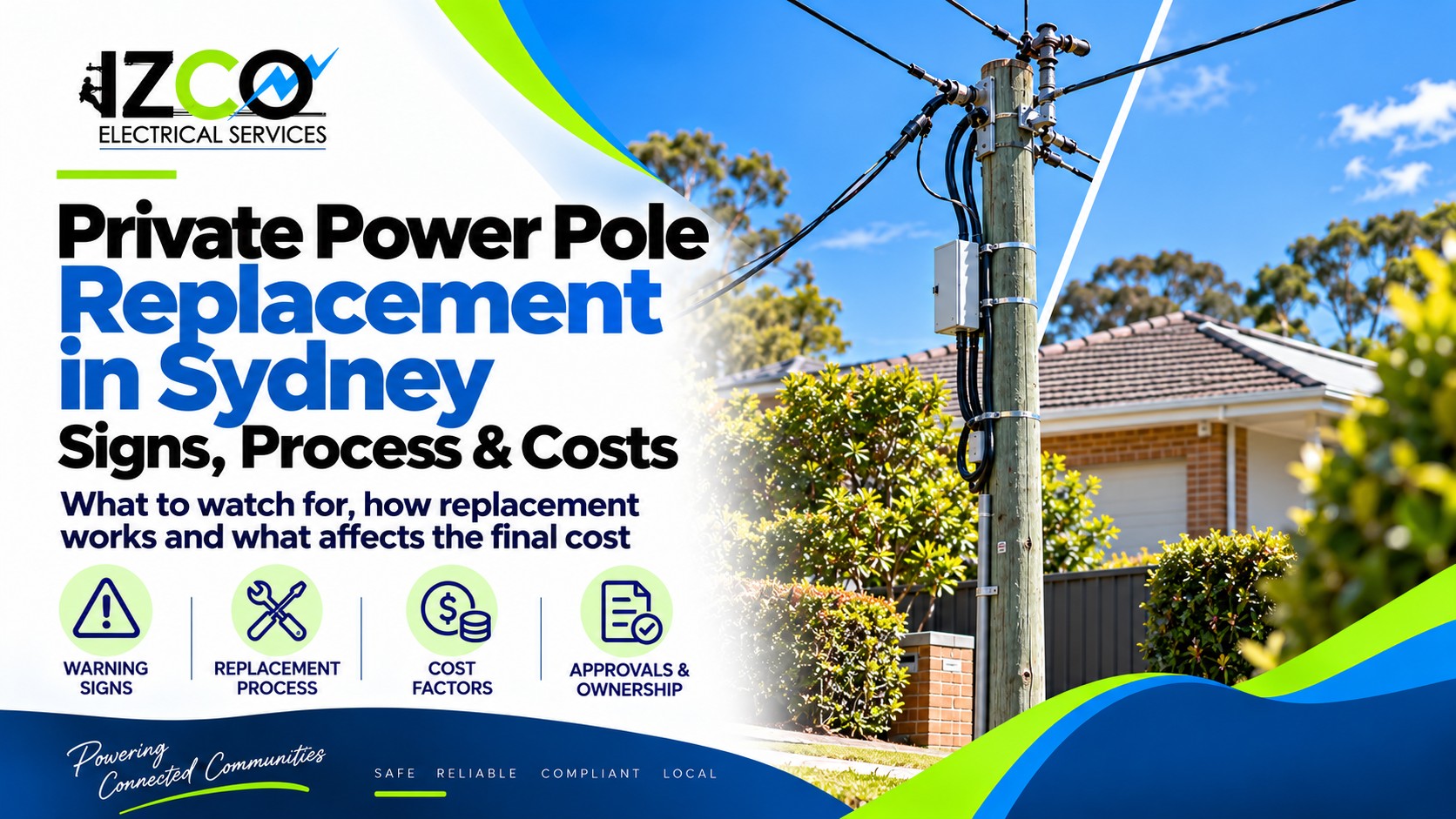
A private power pole can carry the overhead electricity service to a house, workshop or other property where a direct connection from the street isn’t suitable. Installing one isn’t just a matter of buying a timber or steel pole and standing it up. The pole, foundation, clearances and authorised electrical connection must work together under the network’s requirements.
This guide is about planning a new or relocated pole. If you have an ageing or damaged pole, read private power pole replacement, and for the material decision, timber vs steel poles.
Because a new pole is part of the wider supply arrangement, have the proposed location and connection reviewed by a Level 2 electrician in Sydney before ordering materials or digging.
What Is a Private Power Pole?
It’s a supporting structure that is part of a property’s electricity connection and commonly stands on private land. It can carry the incoming service cable to an intermediate point before electricity reaches the building. Unlike many street poles, responsibility for it can rest with the owner, but check the specific asset and connection arrangement. The visible pole is only one part, since service cables, attachment fittings, consumer mains, the switchboard and network permissions are also involved. How it differs from network and temporary poles is in six types of power poles.
When Is a New Pole Needed?
- The building is too far from the approved street connection for a direct attachment
- Rooflines, access routes or structures prevent a compliant cable span
- A new house or development needs an approved connection position
- A driveway or extension requires redesign of the service arrangement
- The property layout calls for an intermediate overhead attachment
- The network or electrical design identifies a private pole as appropriate
A pole isn’t automatically necessary for a long driveway or detached building. Overhead and underground options should be weighed against what the network allows, as covered in overhead vs underground power lines.
Choosing the Location
The location must support a safe cable route and leave access for maintenance. Tree branches, rooflines, the building position, vehicle paths and boundaries all affect it, and a spot that looks tidy on a landscaping plan may fail the electrical clearances or structural requirements. The installer assesses the approved point of connection, required height, cable load, foundation and equipment access, and network requirements vary by distributor. A pole must not block safe access or cross the approved cable route. Construction near overhead conductors needs controls and authorised planning.
Ground and Foundations
The foundation supports the pole against forces from the cable and the environment. Soil type, drainage, slope and nearby excavation matter, and digging should allow for buried water, telecommunications and electrical services. An old footing isn’t automatically suitable for a different pole, so an authorised contractor should say whether an engineered or site-specific foundation is needed.
Timber or Steel?
Both can be used in approved private installations, and the choice depends on the design, exposure, maintenance and approval conditions. A published lifespan or a slimmer look shouldn’t drive it. The full comparison is in timber vs steel private power poles.
Do You Need a Level 2 ASP?
Eligible work on the electricity service connection can require an accredited and authorised Level 2 ASP. The structural installation and the service-line work should be scoped together, but the authorisations for each task can differ, and wider network construction needs different ASP levels. The contractor should establish which equipment belongs to you and which is controlled by the distributor. Never disconnect, move or reattach a service cable yourself.
The Installation Process
- Confirm the existing or proposed electricity connection.
- Inspect the site and identify pole positions, height and cable route.
- Select a compliant design, material and foundation.
- Check distributor requirements, approvals and any metering changes.
- Arrange site access, excavation and electrical isolation.
- Install the pole and approved structural fittings.
- Complete the authorised service-line work, testing and reconnection.
- Provide the work records and maintenance advice.
Several specialists may be involved, so the quote should say who is responsible for civil work, electrical connection tasks and restoring disturbed surfaces. The authorised work is described under IZCO’s private power pole services.
What Affects the Cost?
- Pole material, height, structural rating and attachments
- Soil conditions and any specialised foundation work
- Excavation and machinery access
- Service cable routing and the position of the switchboard
- Network coordination and approved shutdowns
- Removing old structures and making good the site
A quoted pole price isn’t the installed price. Ask for material, construction, electrical service work, testing and reinstatement to be priced separately, and avoid assuming a standard figure without a site assessment.
Planning Around the Property
Driveways, paths, retaining walls and garden beds affect where equipment can go. For a new build, review the pole design while the site plan is still flexible, because the pole location and connection route must be coordinated with other trades, as set out in renovation electrical planning. For an existing home, discuss whether the power will be off and whether vehicles or rooms need to stay clear.
Ownership, Maintenance and Defect Notices
A private pole is often the owner’s responsibility to inspect and maintain, but the boundary depends on the connection and network records. A distributor notice might point to a damaged pole, unsafe attachment or service cable problem. Keep copies and follow their instructions. A notice doesn’t mean the whole connection must be rebuilt or converted underground.
What to Have Ready for a Quote
- Property address and the purpose of the new pole or relocation
- Site or building plans showing driveways, fences and the intended building position
- Details of the current service connection, if known
- Photos from a safe distance, without touching cables
- Any network correspondence, defect notices or approvals
- Access restrictions and building timing
Frequently Asked Questions
Does every Sydney home need a private pole?
No. Many properties connect to a suitable point of attachment or use an approved underground arrangement.
Can I decide where the pole goes?
You can state a preference, but the final location must meet structural, clearance and distributor requirements.
Does the pole need a new foundation?
Foundation design must suit the proposed structure and ground, and an existing footing shouldn’t be assumed suitable.
Can I install a pole before the connection is approved?
Site planning can start earlier, but the final design and connection must meet network requirements, so confirm approval dependencies before committing.
Can a private pole support a neighbour’s supply?
Some connections are shared, but ownership and authorised design must be established through the records and network requirements.
Can an existing pole be moved instead of replaced?
Sometimes, if a compliant new location and route can be approved. Moving may mean replacing cables or foundations and requires an approved plan.
Settle the Pole Arrangement First
Where the pole sits, what it carries and what the network requires should be agreed before construction begins. IZCO Electrical provides private pole and Level 2 connection services across Sydney as a Grade A ASP. Request a call back or phone 0470 123 811.